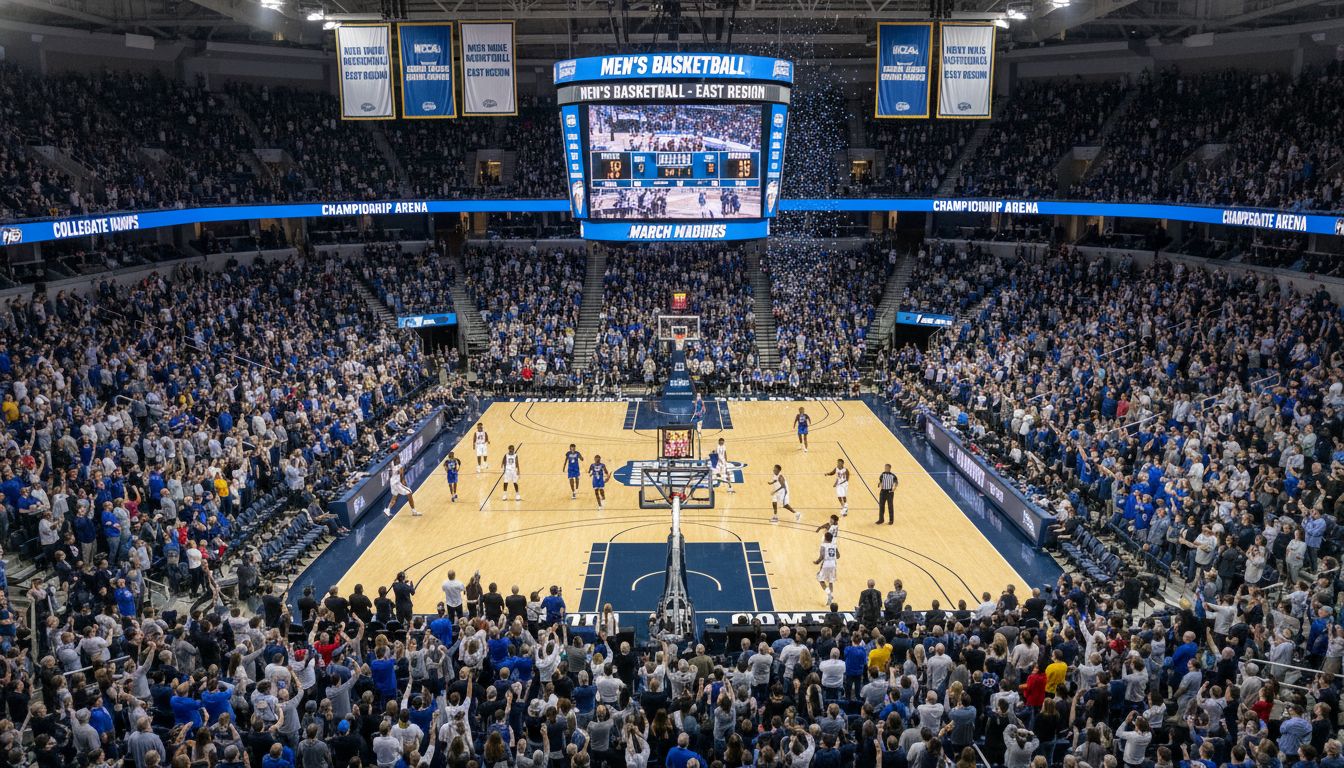
If you love college hoops, the East Region is the part of the 2026 NCAA Tournament bracket you circle in pen, not pencil. You’ve got the likely National Player of the Year, a potential No. 1 pick in the NBA Draft, three of the last four national champs and a half-dozen programs with multiple banners in the rafters. That’s not just a region; that’s a history lesson with a TV timeout. From my perch down here in Lexington, where we measure winters by how long it takes to get from football to bracket season, this East setup looks like the main event. It’s blue bloods, big brands, and pressure games stacked from top to bottom.
Let’s start with the headliner: Duke forward Cameron Boozer, the guy vacuuming up every piece of hardware in sight. He’s already snagged ACC Player of the Year while leading Duke to regular-season and conference tourney titles, and he’s sitting in pole position for All-America and National Player of the Year honors. On top of that, NBA scouts are circling like it’s feeding time, projecting him near the top of the 2026 draft. Duke being the No. 1 overall seed is hardly new, but having that level of star power while fighting through injuries to key starters raises the degree of difficulty. If Jon Scheyer gets this group to Indianapolis, it’s going to feel less like he inherited a machine and more like he rebuilt one on the fly.
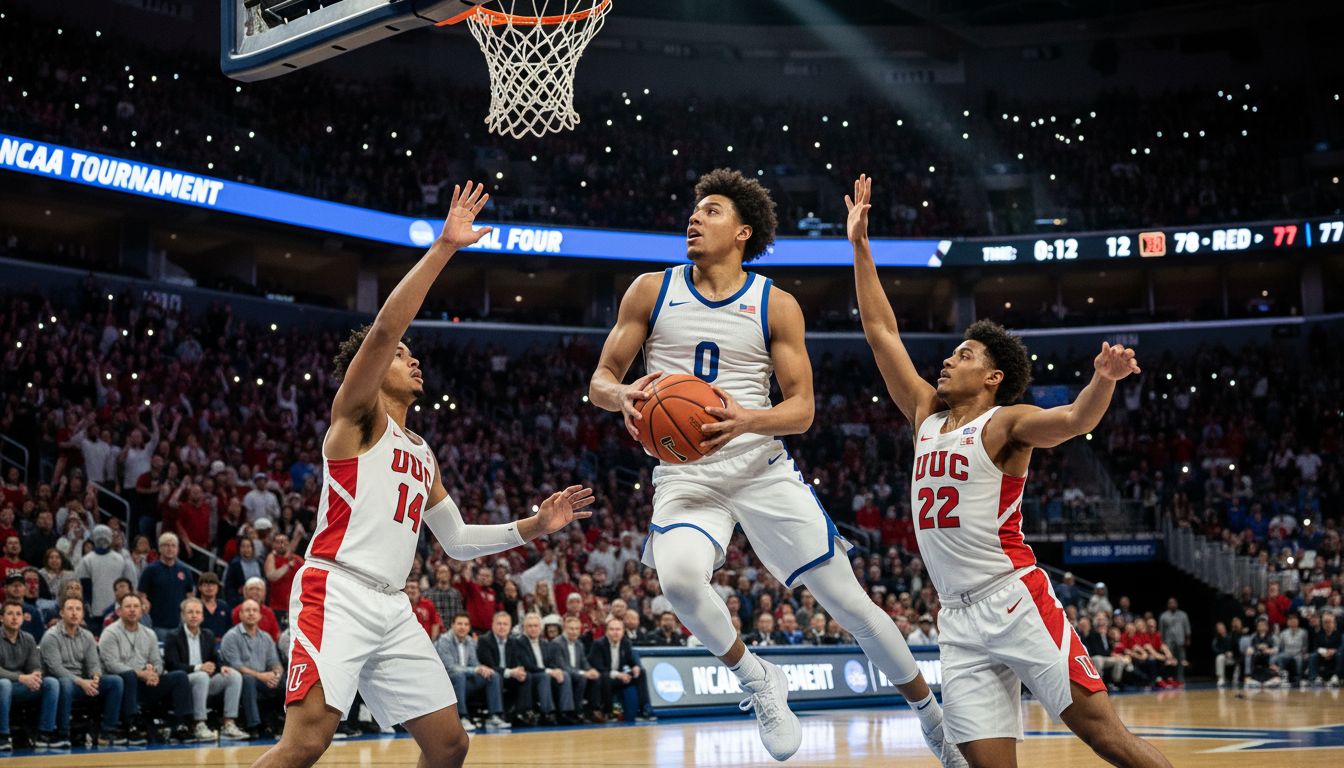
On the other side of the star watch is Kansas freshman Darryn Peterson, another name parked near the top of NBA draft boards. When the Jayhawks are whole, Peterson’s talent looks almost unfair at the college level: smooth, explosive, and able to tilt a game in a couple of trips down the floor. The problem is they haven’t always been whole, and that lack of continuity has kept Kansas from consistently hitting its ceiling. The question for this region is whether Bill Self can shake off a couple years of early exits and ride a healthy Peterson into the second weekend and beyond. If he does, that’s another chapter in an already crowded Hall of Fame résumé; if he doesn’t, the whispers about squandered talent get a little louder.
The real flavor of this East Region is how many programs walk into March expecting, not just hoping, to be in the title picture. Duke, UConn, Michigan State, and Kansas all begin every season with "national championship or bust" baked into the job description. Now throw in St. John’s, riding back-to-back Big East regular-season and tournament crowns under Rick Pitino, and you’ve got a bracket where almost every game features a coach who’s already a legend or well on his way. Scheyer, Dan Hurley, Tom Izzo, Pitino, Self – these are guys whose legacies shift with every run they make or don’t make in March. In a region this loaded, only one of them even gets a shot at cutting down the nets, and that makes every possession feel like it’s carrying 20 years of future debate.
Before we get to the dream matchups, the 8-9 game between Ohio State and TCU is the kind of coin flip that makes or breaks brackets in office pools and church leagues alike. Both squads dropped double-digit games this season, but when they’ve been at their best they’ve knocked off some of the top teams in the country. Ohio State leans on Bruce Thornton and John Mobley Jr. to put points up in a hurry, while TCU makes its living with defense and relentless rebounding. That gap between their ceiling and their floor is why they’re stuck in the middle of the bracket, but it’s also why this one could turn into a wild, back-and-forth show to start Thursday afternoon. The winner’s prize? A date with the No. 1 overall seed Duke, which is about as friendly as drawing a full-court press on a Monday practice.
If you’re a sucker for brand-name basketball, the potential regional final between Duke and UConn in Washington, D.C., is about as good as it gets. These two used to be intertwined in March lore: Duke taking down UConn on the way to early-90s Final Fours, then UConn flipping the script by beating Duke for the 1999 national title and again in the 2004 national semifinal. Since then, the rivalry has cooled into sporadic non-conference meetings, fun but not season-defining. Now we’re staring at the first Hurley vs. Scheyer showdown on the sport’s biggest stage, with a Final Four on the line and two fan bases convinced the universe owes them another banner. You don’t have to be a Duke hater or a Husky diehard to admit that’s probably the single best matchup the entire bracket can offer.
One of the sneaky-good stories in this region comes from outside the traditional power structure: 11-seed South Florida. In just one year, Bryan Hodgson has turned USF into a fast-paced, attacking outfit that swept both the American Athletic Conference regular-season and tournament titles. The Bulls bring the nation’s third-longest active winning streak into March, with only one regulation loss since New Year’s Day. Senior big man Izaiyah Nelson followed Hodgson from Arkansas State and has been a two-way monster, putting up 15.4 points, 9.5 boards, and 1.4 blocks per game on his way to earning both AAC Player of the Year and Defensive Player of the Year honors. Against a bracket full of blue bloods, USF’s style and swagger make them a live threat to trip up higher seeds like Louisville or even Michigan State if they get rolling.
Then you’ve got 5-seed St. John’s, a program that’s rediscovered its bite under Pitino by steamrolling the Big East in back-to-back seasons. Winning 19 of 20 conference games is the kind of grind that takes a toll, though, and you have to wonder if the wear and tear shows up on a neutral floor out in San Diego. A pesky Northern Iowa team could make life miserable in the first round, and a potential second-round clash with Kansas and Self would test just how much gas the Johnnies have left in the tank. From a neutral lens, the idea of Pitino trying to scheme his way through Self in March is delicious theater. For the coaches involved, it’s more like an annual performance review being conducted in front of millions of people.
When you circle back to Duke as the region’s top seed, the whole story keeps coming back to health and resilience. Injuries – especially the situation with point guard Caleb Foster – threaten to become one of those eternal "what if" conversations in Durham barbershops and message boards if this run falls short. On the other hand, if Scheyer navigates this minefield and still gets to Indy, folks will start talking about this as one of the better coaching jobs in early-career history. Cameron Boozer’s résumé reads like it was built in a lab for March success: MVP of gold medal Team USA squads at the U17 and U18 levels, four straight 7A state titles in Florida, and widely regarded as the best player in his class for years. In a region where nearly every coach has a ring, I’m inclined to trust the guy who’s been the winningest player in every gym he’s walked into.
So what does this all add up to? You’ve got a bracket where almost every top seed has enough talent to cut down the nets, and every one of those coaches has a chance to change how we talk about them 10 years from now. A title for Duke would give Scheyer his first and cement the handoff from the Krzyzewski era; another for UConn and Hurley would be three in four years, the start of a full-blown dynasty conversation. Izzo is chasing his first championship since 2000, Pitino could win a third at a third school, and Self is hunting his third at Kansas, which would put him in rarified air even in that trophy-rich program. In March, though, history only loves one team per season, and in this East Region, the margin between legend and lament is going to be razor thin.