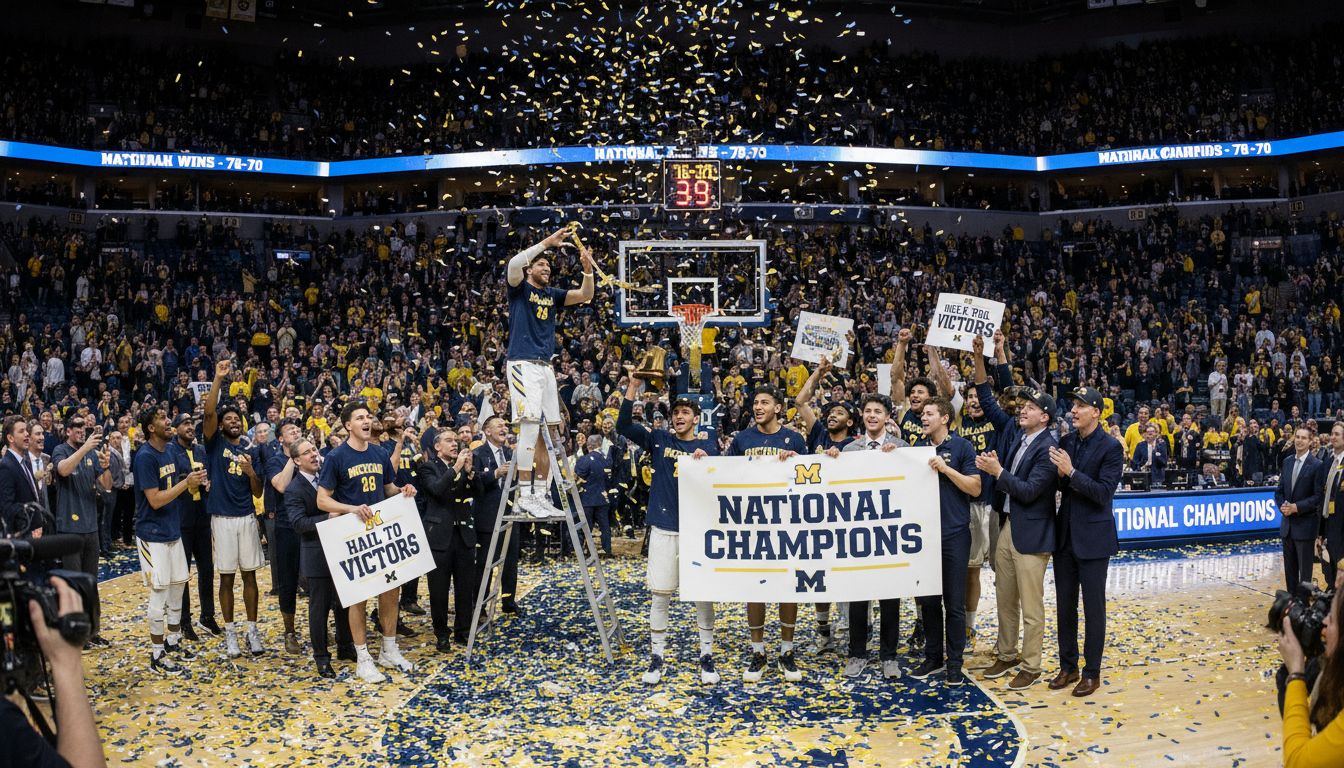
Maize and blue confetti fell in Indianapolis, but what really stuck with me was that hand‑drawn sign in Yaxel Lendeborg’s grip: “SHOCK THE WORLD, BOYS. GO BLUE!” on a plain yellow board. That’s not big‑city marketing; that’s small‑town belief from a kid who started at Arizona Western Community College, bounced through UAB, and then bet on himself one more time with Dusty May at Michigan. On Monday night, that bet cashed in the biggest way, as Michigan out‑slugged UConn 69–63 to win the national championship and close one of the most dominant tournament runs we’ve seen in a long while. From an SEC guy in Auburn country, I’ll tell you this: you don’t have to love the Big Ten to respect what we just watched. This was toughness, defense, and buy‑in — the kind of stuff that still wins in March, no matter what the analytics say about pace and threes.
All tournament long, folks were talking about Michigan’s offense, and they weren’t wrong to do it. Ninety‑plus in every game leading up to the title, a 91–73 dismantling of Arizona in a semifinal that felt like a heavyweight fight, and a supposedly close win over Alabama that, if you watched it, wasn’t really all that close. But on the night it mattered most, the fireworks took a back seat and the Wolverines won it the old‑fashioned way: they guarded like their scholarships depended on it. They held UConn to 31% from the field, 27% from three, forced 11 turnovers and swatted six shots, turning a high‑powered Huskies offense into a grind‑it‑out slog. Most impressively, Michigan held its last four tournament opponents to their season‑low field‑goal percentages — Alabama at 30%, Tennessee at 19%, Arizona at 35%, and UConn buried at 27% in the title game — a defensive stretch you almost never see in this era.
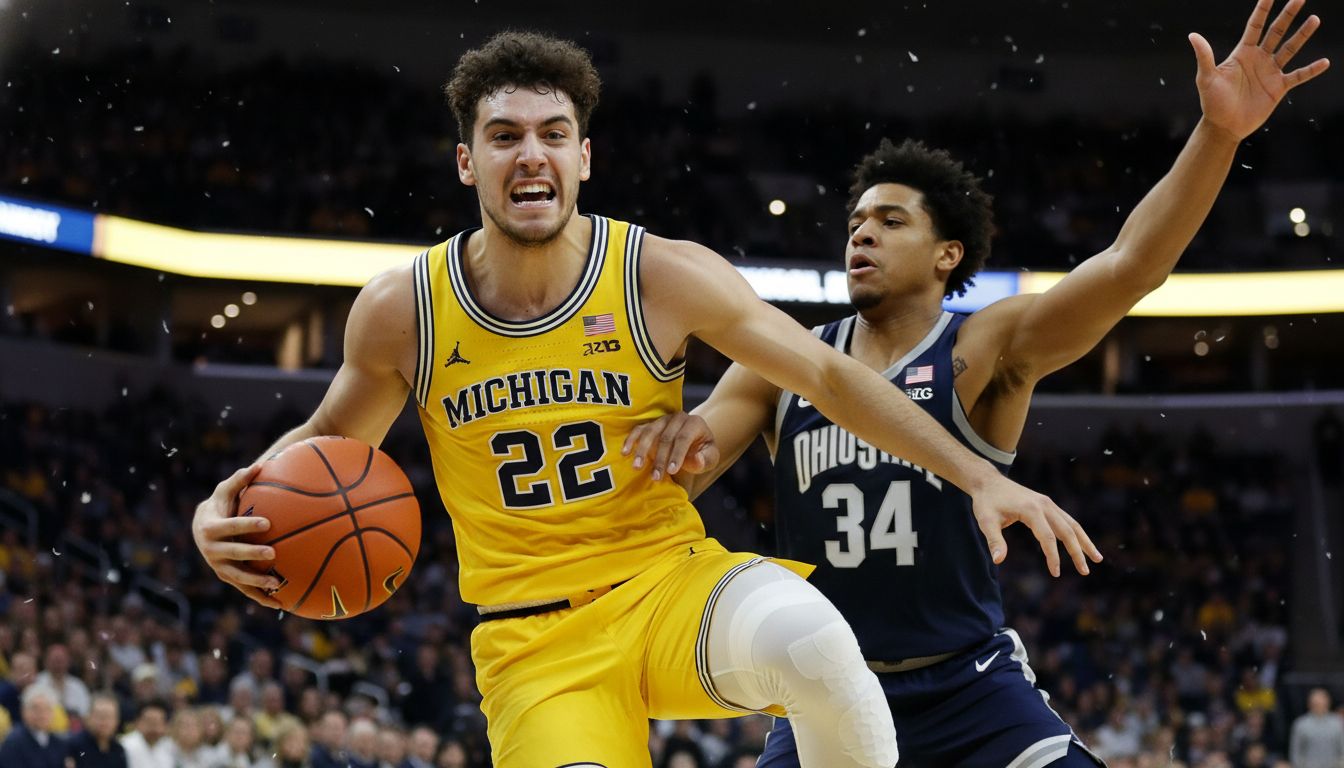
Dusty May summed it up clean: when one side of the ball sagged, the other side picked it up, and the shared commitment on defense pushed them over the hump. That line would play just fine in any SEC locker room I’ve been around; it’s the same blue‑collar gospel Bruce Pearl preaches down in Auburn. In a sport where we obsess over spacing and schemes, Michigan’s calling card in this run was simple and stubborn — stay connected, contest everything, finish the possession. You don’t have to be the tallest or the most heralded if you’re the hardest‑playing group on the floor, and this team wore that identity like a badge. It’s a reminder that culture still matters, whether you’re in Ann Arbor, Auburn, or anywhere else trying to climb the mountain.
The heart of that culture was Lendeborg, and he was clearly nowhere near 100%. Sprained MCL, rolled ankle in the Final Four, and you could see from the opening minutes Monday that every step came with a wince. At halftime he admitted he felt awful, “super weak,” and that he “couldn’t make anything,” which is usually basketball code for, “Coach, maybe sit me.” Instead, he played all 20 first‑half minutes and finished with 36 total, more than anyone on Michigan’s roster, finding ways to matter even when the shots didn’t fall. He used his frame to bully mismatches, broke a 27–27 tie with a strong seal and lob finish over UConn’s Jayden Ross, added a tough floater through contact on Tarris Reed Jr., and delivered the dagger with a tip‑in of his own miss to push the lead to ten late.
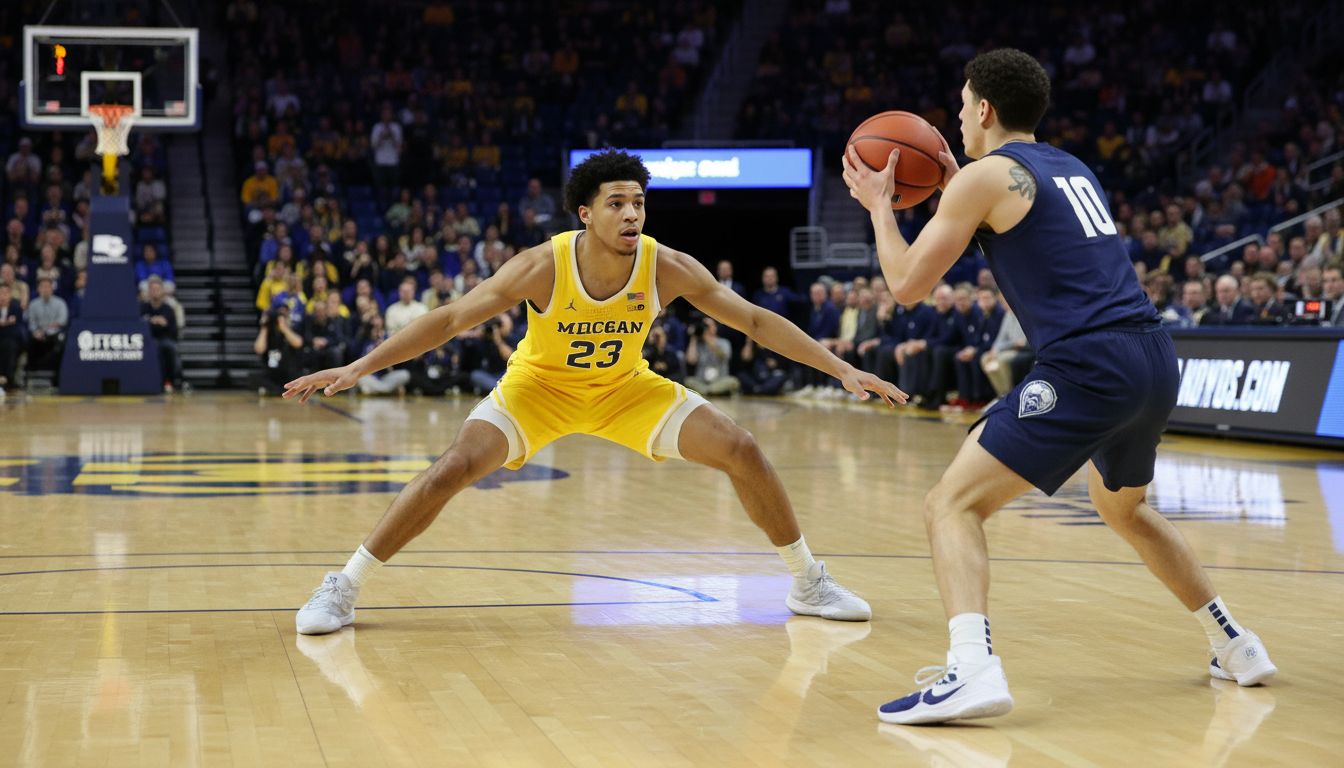
If you’re a fan of old‑school college hoops, that’s the stuff you tell your kids about — not just the points, but the stubbornness to stay out there when your body is begging you to sit. Lendeborg was blunt after the game, saying he still “sucked” in the second half but made a little push, and that his teammates refused to give up on him while he wrestled with both pain and some mental battles. That honesty is refreshing in a world where postgame quotes can sound rehearsed. Defensively, his impact was obvious on UConn’s freshman sniper Braylon Mullins, who came in on a heater after torching Duke and Illinois but left the floor just 4‑for‑17 overall and 3‑for‑10 from deep under Lendeborg’s watch. On the biggest stage, all the stars and all the sets gave way to something simpler: a hobbled senior deciding he was not going to be the reason his team fell short.
UConn didn’t exactly help its own cause, either, especially in an area that has haunted the Huskies all year — fouling. They ranked in the 200s nationally in fouls per game during the season and were even worse in the tournament, and that bad habit showed up again with 22 whistles on championship night. Michigan made them pay like a veteran group should, drilling 25 of 28 free throws, including a stretch of 20 straight that quietly separated the Wolverines when buckets were hard to find. By contrast, UConn only got to the stripe 16 times, cashing 12, and in a six‑point game that kind of gap is the margin between a trophy and a long, quiet plane ride home. Elliot Cadeau, who earned Final Four Most Outstanding Player honors, led the way with 19 points and an 8‑for‑9 performance at the line, showing the kind of composure every coach begs for from his point guard in March.
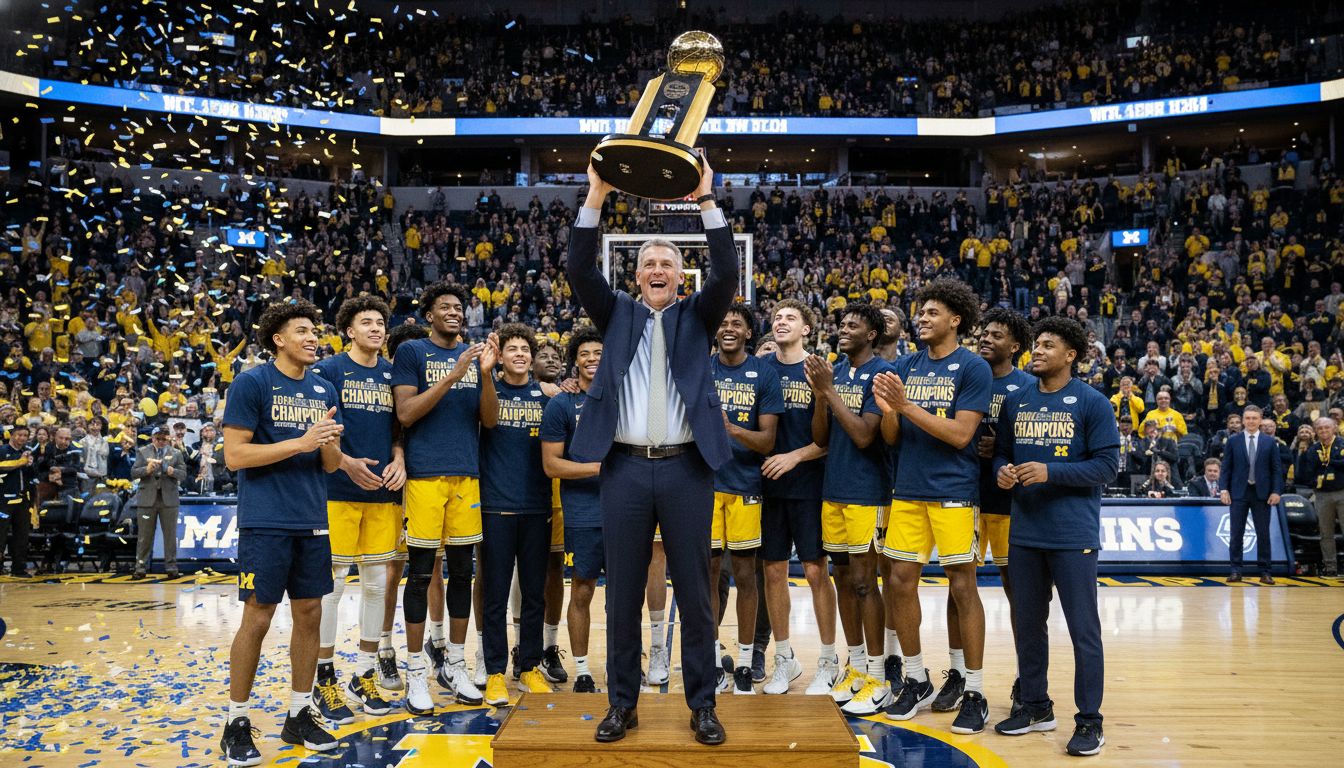
To be fair to the Huskies, there were things they did well enough to win, and Dan Hurley was right to point that out. They controlled the glass 46–39, kept Aday Mara in check after his 26‑point outburst against Arizona, and held Michigan under 40% shooting themselves. From a neutral angle, you could feel Hurley’s frustration when he said it really just came down to not making enough shots, especially against a team that had “destroyed everyone” coming into the night. Sometimes, in March, the ball simply doesn’t drop — but when you foul too much and send a confident group to the line, you’re asking for trouble. UConn found that out the hard way against a Michigan team that refused to blink.
Zoom out, and this win does more than just raise another banner in Ann Arbor; it finally ends one of the more embarrassing talking points hanging over the Big Ten. Before Monday, the league hadn’t claimed a men’s basketball national championship since Tom Izzo’s Michigan State squad cut down the nets in 2000, led by another hobbled senior warrior in Mateen Cleaves. Fourteen Final Four trips came and went in that stretch without a title, fueling every “overrated Big Ten” joke you’ve heard at a sports bar south of the Mason‑Dixon. Michigan broke that streak in style, and they did it in a year when the conference flexed across multiple sports. UCLA brought home a women’s basketball crown, Indiana football grabbed its first College Football Playoff national title, and for the first time since the SEC in 2007, one league swept championships in men’s hoops, women’s hoops, and football.
Now, let’s not get carried away and pretend the Big Ten has suddenly turned into the SEC of the Midwest — we’ve still got the deeper football gauntlet and the louder tailgates down here — but you have to tip your cap to a conference clearly figuring out the new NIL and transfer‑portal landscape. No league appears to be thriving more in this moment than the Big Ten, and Michigan is a prime example of how to blend portal additions, player development, and a clear identity into something special. From an Auburn perspective, it’s hard not to see echoes of Bruce Pearl’s build: take some overlooked guys, give them belief, crank up the defensive intensity, and convince them that outworking people is a skill. Dusty May stayed true to that recipe, and now, with reports that he’s told Michigan he’s not chasing other jobs, the Wolverines have stability at the top at a time when that’s gold. The real work starts immediately, with Lendeborg almost certainly off to the NBA Draft and big men Morez Johnson Jr. and Aday Mara facing decisions of their own about whether to return or test the waters.
For Michigan fans, this title will live forever — the year the drought ended, the year a banged‑up senior refused to sit, the year a first‑team All‑American and an unflappable point guard dragged the Big Ten back to the winner’s circle. For the rest of us around the country, especially those of us in SEC country who remember living and dying with Auburn’s own Final Four run in 2019, it’s a reminder of why March still owns the sports calendar. Teams with scars, transfers with chips on their shoulders, and coaches with clear, demanding voices can still shock the world when the bracket comes out. You don’t have to root for maize and blue to appreciate the way this group defended, competed, and stayed together when it mattered most. And if you’re building a program anywhere — whether it’s Michigan, Auburn, or some junior college gym in the desert — the blueprint on display Monday night is one worth studying: defend, stay connected, own your identity, and don’t be afraid to shock a few people along the way.